


Understanding the signs: Merisca’s journey through breast cancer and self‑advocacy
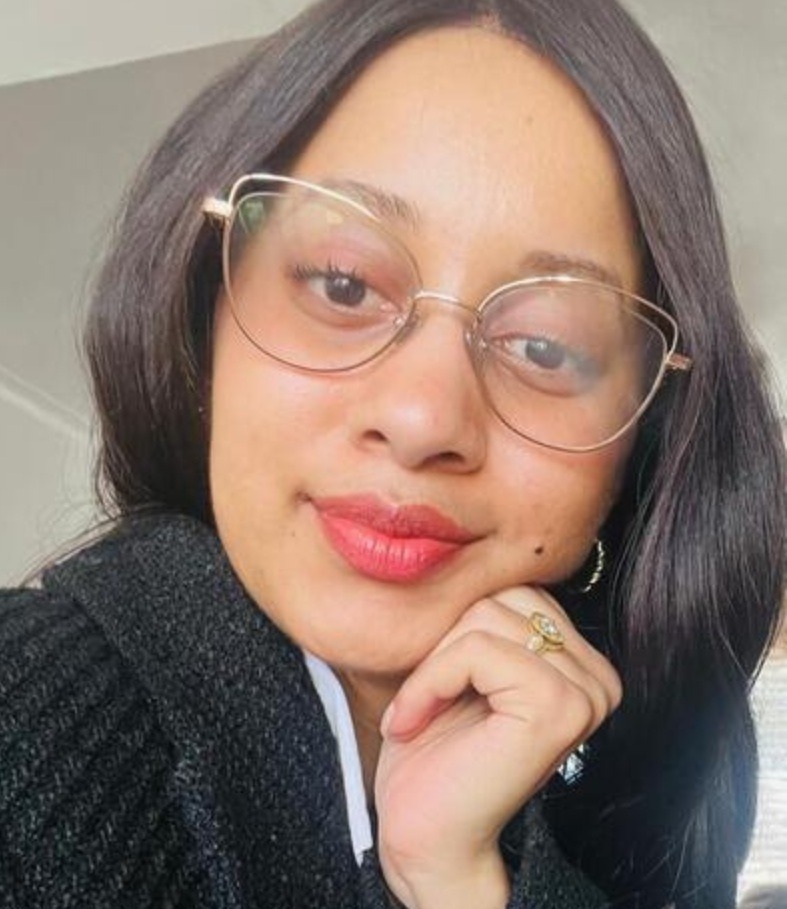
Merisca Hartzenberg, 30, lives in the Western Cape Province. In July 2024, she was diagnosed with breast cancer. A moment that changed not only her life, but the way she understands her body, her faith, and her future.
Early symptoms
Her journey began quietly. At 29, she noticed a cyst in her breast that grew over time and caused occasional light pain. Her nipples began to invert, and she saw yellow discharge. The skin around her nipple developed the distinctive “orange peel” appearance often associated with breast cancer. Her breast even began pulling slightly to the left. Later, a lump appeared under her arm, accompanied by a swollen lymph node.
Like many younger women, she didn’t immediately recognise these as warning signs.
“I was looking for the more common changes people often talk about, like weight loss or loss of appetite, so I didn’t recognise the signs I was experiencing right away. At 29, I felt too young to be facing cancer.”
She turned to Google for answers. Something she now reflects on with caution.
“By the time I compared my symptoms online, the cancer had already spread through the left side of my breast. It taught me that while online searches can give information, nothing replaces getting checked by a doctor early on.”
A delayed diagnosis
In March 2023, she visited her GP after feeling a lump. She was referred for an ultrasound and mammogram, but the mammogram was declined because of her age. The ultrasound revealed three cysts, and no further action was taken.
She returned later for another ultrasound, but again, nothing was done.
Still searching for answers, she visited a second doctor. Even though the cyst had grown, she was prescribed anti-inflammatory medication and sent home.
A full year passed.
Then, while showering, she felt a lump under her arm. She monitored it for a month, unsure whether it was serious, until her husband and family urged her to seek specialist care.
Through a colleague, she was referred to Apffelstaedt, Hoosain & Associates, a turning point in her journey. The specialist who examined her immediately recognised the seriousness of her symptoms and ordered imaging, including the mammogram she had previously been denied. A biopsy followed.
The results confirmed breast cancer.
Staging – the moment everything changed
“I’ll never forget sitting in that room with my husband beside me, waiting for the results. Dr Hoosain started explaining how staging works, writing it out on paper. At first, she wrote down stage 4, and in that moment, I felt like I left the room mentally. It was such a shock.”
Then, step by step, Dr Hoosain explained the process and circled the final staging: stage 3.
“I was stunned. We always think this happens to other people. But cancer doesn’t check your age, your plans, or how well life seems to be going. It can show up when you least expect it.”
Genetic testing – a family revelation
Because she is an identical twin, genetic testing was recommended. The results revealed that she carries the BRCA2 gene mutation, which increases the lifetime risk of breast and ovarian cancer.
Her mother also tested positive, and her twin sister carries the mutation too.
“Learning this was a big moment for my family and me. It helped us understand not just my diagnosis, but what it could mean for their health moving forward.”
Treatment – 10 months of endurance
Her treatment plan was intensive:
- Chemotherapy:
4 cycles of Doxorubicin (“the Red Devil”) and 12 cycles of Paclitaxel.
The chemo targeted active cancer cells but could not eliminate dormant ones, which influenced the surgical decisions that followed. - Surgery:
A double bilateral mastectomy.
Reconstruction involved fat transfer from her stomach to rebuild the left breast and an implant on the right. - Radiation:
15 sessions targeting the breast and lymph node region. - Medication:
She now takes Tamoxifen daily at the same time each day to reduce the risk of recurrence.
She is also managing lymphedema, a complication that causes swelling in her arm and hand. She is in the process of getting a compression sleeve and glove, and she attends physiotherapy to ease stiffness caused by radiation.
The emotional and psychological journey
“In the beginning, it felt almost unreal. Like I was watching a movie about someone else’s life.”
Chemotherapy was especially difficult.
“There were moments when I didn’t want to go back, because it felt like I was poisoning myself. Getting sick, recovering just enough, and then returning for another round.”
She describes nights of intense insomnia, lying awake while her mind raced. She often isolated herself after chemo, staring at four walls, feeling almost bedridden and stripped of independence.
Her faith became her anchor.
“My faith in Jesus kept me sane. On nights when I couldn’t sleep, I played gospel music to calm my mind. Hope and peace were vital. They made the journey endurable.”
She also carried the emotional weight of protecting her loved ones.
“I held back my tears in front of my parents because I didn’t want them to see how much the treatment was affecting me. When my husband came home late one night, I finally let it all out. Cancer doesn’t just affect the person diagnosed; it touches everyone around them.”
Side effects – and the impact on identity
She experienced hot flushes, brain fog, appetite changes, and hair loss.
“After I lost my hair and was bald for a few months, I avoided looking in the mirror because I didn’t recognise myself. Who was I? It ate at my self-esteem. I never thought hair would mean so much to me.”
Today, she embraces her chemo curls.
“My hair is my crown and glory. I love the chemo curls now.”
Merisca’s advice is grounded in lived experience:
“Please ADVOCATE for yourself when you are not being heard. YOU are the only one that knows your body, listen to it.”
“Extend grace to those who do not know better. Correction without compassion is empty; but when paired with wisdom, it transforms lives.”
She also wants people to understand that cancer does not erase identity. “During my cancer journey, I had to remind people that my condition did not define me. I was still Merisca. Even if I looked weak or frail, cancer never stripped away my identity. It was only a season I had to walk through. Cancer was part of my story, but it was never the author of who I am.”
What does it mean to carry the BRCA2 gene mutation?
- Everyone has two copies of the BRCA2 gene. When one copy is mutated in a disease‑causing way, the risk of breast and ovarian cancer increases.
- Carrying the mutation does not mean cancer is inevitable, but it does raise lifetime risk.
- Genetic testing is especially important for younger patients or those with a family history, as results can guide treatment and preventive decisions.
Gene testing is constantly evolving and its role in breast cancer is becoming increasingly important. It gives medical professionals a new level of information from which to determine management options and ultimately, allows for a more individualised approach to cancer.

